
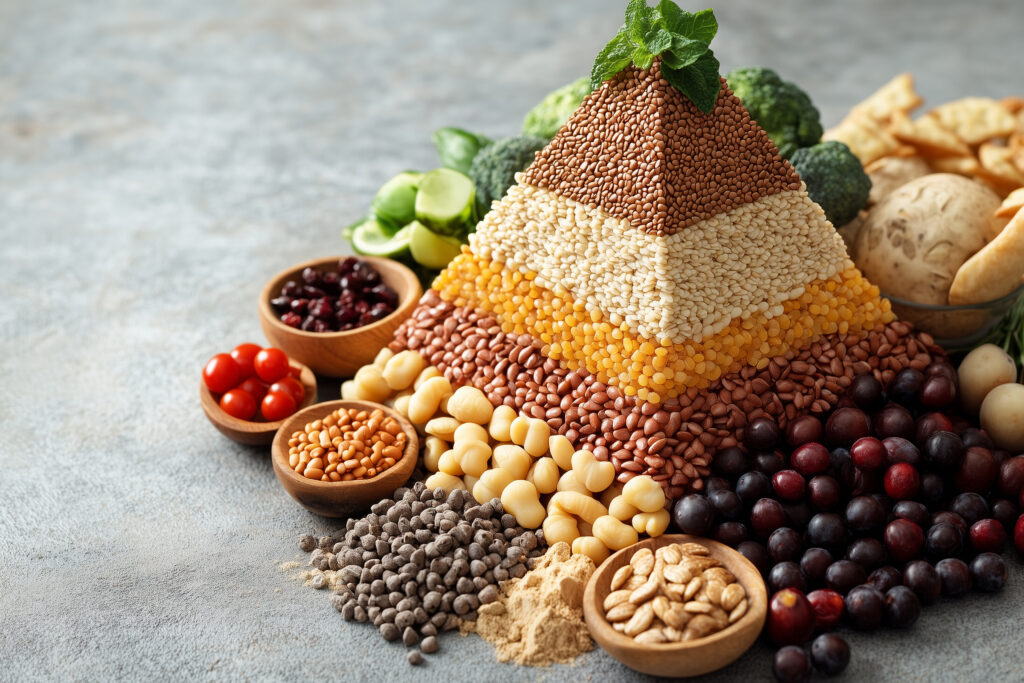
For years, the Food Pyramid was the gold standard in nutrition education. Found in school textbooks, doctors’ offices, and on government pamphlets, it shaped how millions of Americans thought about healthy eating. But as our understanding of nutrition has evolved, so has our recognition of the pyramid’s deep flaws—many of which stem from outdated science, political influence, and food industry lobbying.
Let’s take a look at how the original Food Pyramid was developed, why it’s been criticized, and what a truly healthy dietary framework should look like today.
The Origins of the Food Pyramid
The original concept of the Food Pyramid began in Sweden in the 1970s, created in response to rising food prices. The idea was adopted by the United States and transformed into a national nutrition guide by the U.S. Department of Agriculture (USDA) in 1992. The familiar triangle shape was meant to show recommended proportions of different food groups, with the base representing the foods we were advised to eat the most of.
The original U.S. Food Pyramid included:
• Base (6–11 servings/day): Bread, cereal, rice, and pasta
• Second tier: Fruits (2–4 servings) and vegetables (3–5 servings)
• Third tier: Dairy and meat/protein (2–3 servings each)
• Top (use sparingly): Fats, oils, and sweets
At the time, the pyramid seemed like a simple, visually accessible way to promote balanced eating. However, the science—and the politics—behind its development left much to be desired.
Flawed Science and Political Influence
Many of the pyramid’s recommendations were based on the dietary fat scare of the 1970s and 1980s, which wrongly linked dietary fat directly to heart disease without distinguishing between healthy and unhealthy fats. As a result, low-fat, high-carbohydrate diets became the norm, and all fats were lumped together as bad—a view we now know is oversimplified and inaccurate.
Even more concerning, food industry lobbying played a significant role in shaping the pyramid. The grain industry, for example, had a strong influence in securing the base of the pyramid—encouraging Americans to eat 6 to 11 servings of grains per day, regardless of quality (refined vs. whole grains). Meanwhile, there was little differentiation between types of protein, fats, or even the quality of carbohydrates.
The pyramid also gave little guidance on added sugars, ultra-processed foods, or portion control, despite mounting evidence that these were central drivers of obesity and chronic disease.
The Consequences of the Old Food Pyramid
The public followed the pyramid’s advice for years, shifting toward low-fat, high-carb diets filled with refined grains and processed low-fat products. During this time, rates of obesity, type 2 diabetes, and metabolic syndrome skyrocketed.
Many people were consuming large quantities of white bread, pasta, and low-fat snacks laden with sugar, all while avoiding beneficial fats from nuts, seeds, avocados, and fish. The result? A generation misled into believing that a fat-free muffin was healthier than a handful of almonds.
What a Healthy Food Pyramid Should Look Like
Modern nutrition research paints a very different picture of what a healthy diet should look like. Today, most experts agree on the following key principles:
1. Prioritize Whole, Minimally Processed Foods
A healthy pyramid should have a foundation built on vegetables, fruits, legumes, and whole grains, not refined carbs. Variety is key—colorful produce and fiber-rich foods offer vital nutrients and support gut health.
2. Include Healthy Fats
Fats are essential for hormone production, brain health, and nutrient absorption. Healthy fats from sources like olive oil, nuts, avocados, and fatty fish should be incorporated daily.
3. Focus on High-Quality Proteins
Proteins from both animal and plant sources should be consumed based on individual needs and preferences. Choose lean meats, fish, eggs, beans, tofu, and dairy—while minimizing highly processed meats.
4. Limit Added Sugars and Processed Foods
Processed snacks, sugary drinks, and convenience foods high in refined grains, added sugars, and industrial oils should be at the top of the pyramid, to be consumed sparingly.
5. Emphasize Hydration and Lifestyle
Water should be the beverage of choice, and lifestyle factors like regular movement, adequate sleep, and stress management should complement dietary recommendations.
A Better Visual Model: The Healthy Plate or Updated Pyramid
Many experts now favor the Harvard Healthy Eating Plate or updated food pyramid models, which:
• Recommend whole grains over refined grains
• Distinguish between healthy and unhealthy fats
• Emphasize variety and portion control
• Promote plant-based eating without demonizing animal proteins
• Encourage mindful eating and lifestyle awareness
These updated models reflect current science, not outdated beliefs or industry influence.
Final Thoughts
The original Food Pyramid was a well-meaning but deeply flawed tool that misled the public for decades. By promoting high intakes of refined carbohydrates and vilifying all fats, it contributed to rising rates of obesity and chronic illness.
As we continue to learn more about nutrition, it’s critical to move away from one-size-fits-all advice and toward evidence-based, individualized guidance. A truly healthy diet is one based on whole foods, balanced macronutrients, and mindful eating—not marketing or outdated science.
It’s time we rebuild the pyramid—this time, on a solid foundation of truth.
Stay informed, eat mindfully, and nourish your body with intention.