
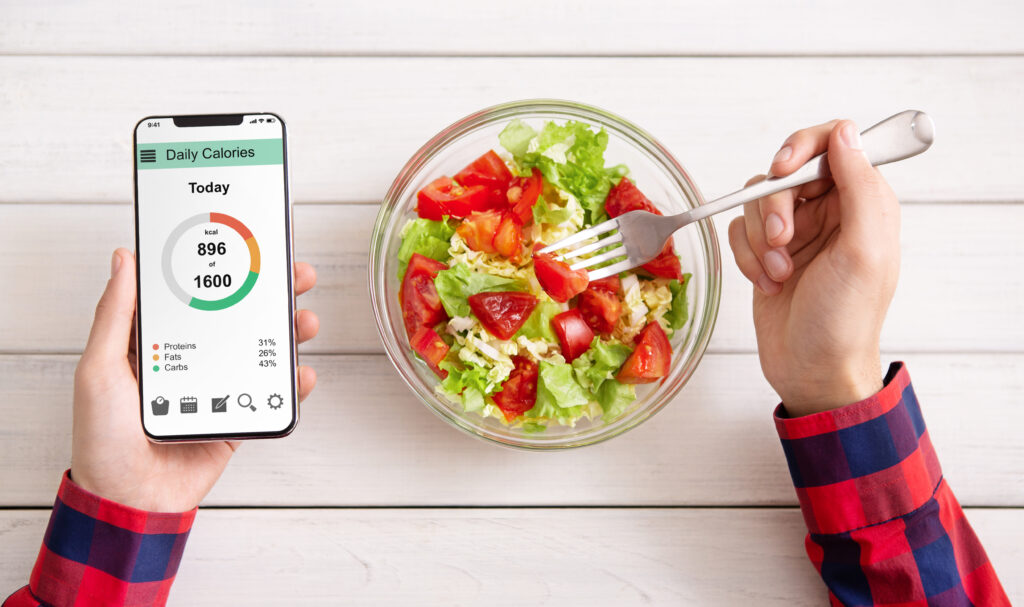
When patients come to me for help with weight loss, one of the first questions they often ask is:
“Do I have to count calories or track every bite I eat?”
I get it. Food tracking can feel tedious, overwhelming, or even triggering. Maybe you’ve tried it before and found it unsustainable—or maybe it made you obsess over food in a way that didn’t feel healthy.
As an obesity medicine doctor, I want to be honest with you: you don’t have to track your food to lose weight, but there are times when it can be incredibly helpful.
Let’s break it down.
What’s the Point of Tracking, Anyway?
Tracking your intake—whether that’s calories, protein, or macronutrients—is simply a tool to build awareness.
We often think we’re eating “pretty healthy,” but without a clear picture of what and how much we’re consuming, it’s easy to underestimate portions or miss hidden calories and imbalances (like not getting enough protein).
Tracking gives us data—not judgment.
Just like a financial budget helps you understand where your money is going, food tracking helps you understand where your energy is going. Once you know your baseline, you can adjust it to better support your goals.
Tracking Can Be Empowering… at the Right Time
I often recommend temporary tracking when:
- A patient is just starting out and wants clarity about their eating habits
- We’re hitting a plateau and need to troubleshoot
- Someone is on a medication like a GLP-1 and their intake has dropped—we need to ensure they’re still getting enough protein and nutrients to preserve muscle and stay healthy
- We’re fine-tuning macronutrients (protein, carbs, and fats) to support metabolic health, blood sugar, or appetite regulation
The key word is temporary. Tracking doesn’t have to be forever. Many of my patients use it for a few weeks or months as a “nutrition reset” and then move on to more intuitive or mindful eating, once they’ve built the foundation.
When Tracking Doesn’t Help
For some patients, especially those with a history of disordered eating or perfectionism around food, tracking can cause more stress than benefit. In those cases, we shift the focus from numbers to structure.
Instead of logging every bite, we might use:
- Consistent meal timing
- Portion guidance (like the plate method or hand portions)
- Simple protein and fiber goals without logging everything
- Food journaling for hunger, fullness, or energy levels, instead of calories
The goal is always sustainability. If tracking makes you feel anxious, restricted, or like a “failure” when you’re not perfect—it’s not the right tool for you right now.
Why Macros Matter
When people hear “tracking,” they often think of calories. But I find that focusing on macros—protein, carbs, and fats—can be more powerful than focusing on calories alone.
Here’s why:
- Protein: Essential for preserving muscle (especially important if you’re losing weight or over 40), helps control appetite, and supports metabolism.
- Carbs: Your body’s main energy source, especially for the brain and workouts. Choosing high-fiber carbs helps with fullness and blood sugar stability.
- Fat: Important for hormones, brain health, and vitamin absorption.
Balancing macros ensures that your body isn’t just losing weight—it’s losing fat while protecting muscle, hormones, and energy levels.
Setting Macro Goals
Macro goals aren’t one-size-fits-all, but here’s a framework many of my patients find sustainable:
- Protein: ~30% of daily calories
- Fat: ~40% of daily calories
- Carbs: ~30% of daily calories
This balance supports steady energy, helps regulate hormones, and keeps protein high enough to protect muscle while losing weight.
Example: If your calorie target is 1,800 per day, your macros might look like:
- Protein: 135 g (30%)
- Fat: 80 g (40%)
- Carbs: 135 g (30%)
Of course, these can be adjusted based on your individual goals, activity level, and how your body responds—but this 40/30/30 approach is a strong starting point for many people.
Apps That Can Help
Thankfully, tracking doesn’t mean carrying a notebook everywhere. There are apps that make macro tracking simple and quick:
- MyFitnessPal – Large food database, barcode scanning, easy to use
- Lose It! – Very user-friendly, great for beginners
- Cronometer – More detailed, verified macros, barcode scanning, includes vitamins and minerals as well as macros
- Macros+ – Clean interface, focused specifically on macro tracking
Each has free and premium versions, so you can try a few and see what feels right for you.
So… What Should You Focus On?
Whether or not you choose to track, the core nutrition principles don’t change. I guide my patients to:
- Prioritize protein at every meal
- Include fiber-rich carbs like fruits, veggies, beans, and whole grains
- Enjoy healthy fats—avocados, olive oil, nuts, and seeds
- Avoid extreme restriction, which backfires long term
- Eat regularly to support stable blood sugar and energy
What I Tell My Patients
You don’t have to track your food forever—or even at all—to make meaningful progress. But you do need a way to build awareness around your nutrition. For some, that’s numbers. For others, it’s structure, consistency, and mindful habits.
There is no single “right way” to lose weight. My job is to help you find the way that aligns with your lifestyle, health goals, and relationship with food.
At Ideal Health MD, I work with women and men navigating weight, hormones, metabolism, and midlife changes with personalized, evidence-based care—no shame, no fads, no gimmicks.
Whether you’re on a GLP-1, exploring hormone therapy, or simply ready to feel like yourself again, you don’t have to figure it out alone.