
Protein gets a lot of attention—and for good reason. But there’s another nutrient I talk about frequently with patients that gets far less excitement: fiber.
Fiber may not be trendy, but it plays an important role in digestive health, blood sugar regulation, cholesterol, satiety, and overall metabolic health. Higher-fiber eating patterns are also associated with a lower risk of cardiovascular disease, type 2 diabetes, and colorectal cancer.
The problem is that most Americans aren’t getting nearly enough.
Whether you’re working on your metabolic health, managing your weight, or simply trying to eat in a way that supports healthy aging, fiber deserves a little more attention.
What Is Fiber—and How Much Do We Need?
Fiber is a type of carbohydrate found primarily in plant foods that our bodies cannot fully digest. Instead of being completely broken down and absorbed in the small intestine, much of it continues through the digestive tract, where it can influence everything from bowel regularity to our gut microbiome.
There are different types of fiber, but you’ll often hear them divided into two broad categories. Soluble fiber dissolves in water and can help slow digestion, improve the blood sugar response after meals, and lower LDL cholesterol. Insoluble fiber adds bulk to stool and helps support regular bowel movements. Most fiber-rich foods contain a combination of both, so there’s generally no need to track them separately.
A good general target is about 14 grams of fiber for every 1,000 calories consumed. Daily recommendations vary by age and sex, but as a practical guide:
- Women age 50 and younger: about 25 grams per day
- Women over 50: about 21 grams per day
- Men age 50 and younger: about 38 grams per day
- Men over 50: about 30 grams per day
These are general recommendations rather than rigid numbers. Individual needs can vary based on calorie intake, health conditions, medications, and gastrointestinal tolerance.
Yet most Americans fall well short of recommended amounts. The reason is fairly simple: fiber comes primarily from plants. When our diets contain fewer vegetables, fruits, beans, lentils, whole grains, nuts, and seeds—and more highly refined and ultra-processed foods—fiber intake tends to drop.
Why Fiber Matters for Metabolic Health
One of fiber’s most useful effects is what happens after we eat carbohydrates. Soluble fiber can slow digestion and glucose absorption, helping reduce rapid rises in blood sugar after a meal.
Think about the difference between eating an apple and drinking apple juice. Both contain carbohydrates and naturally occurring sugar, but the whole apple also contains its natural fiber and requires chewing. The result is a very different food from juice with much of that fiber removed.
This is one reason I encourage patients to think about the quality of carbohydrates rather than simply labeling carbohydrates as “good” or “bad.” A bowl of lentils and a handful of candy both contain carbohydrates, but metabolically and nutritionally they are very different foods.
Fiber can also help with satiety. Foods such as vegetables, fruits, beans, lentils, and whole grains tend to provide volume and require more chewing, while certain types of fiber slow digestion. Together, those effects can help meals feel more satisfying.
That can be particularly useful in weight management. The goal shouldn’t always be to figure out how to eat the least amount of food possible. I would much rather help someone build meals that are nutritious, satisfying, and sustainable.
Fiber, Your Gut, and Your Heart
Fiber also plays an important role in the gut microbiome. Certain fibers act as prebiotics, providing fuel for beneficial bacteria in the gastrointestinal tract. When gut bacteria ferment these fibers, they produce compounds called short-chain fatty acids that help support the cells lining the colon and are involved in metabolic and immune processes.
You don’t need an expensive “gut health” supplement or detox to begin supporting your microbiome. One of the simplest places to start is by eating a greater variety of plant foods.
Certain types of soluble fiber can also help lower LDL cholesterol. Oats, barley, beans, lentils, apples, citrus fruits, and psyllium are particularly good sources. Fiber certainly isn’t the only factor that matters for cardiovascular health, but increasing it is one relatively simple way to improve the nutritional quality of your diet while supporting both heart and metabolic health.
How to Get More Fiber Without Overcomplicating It
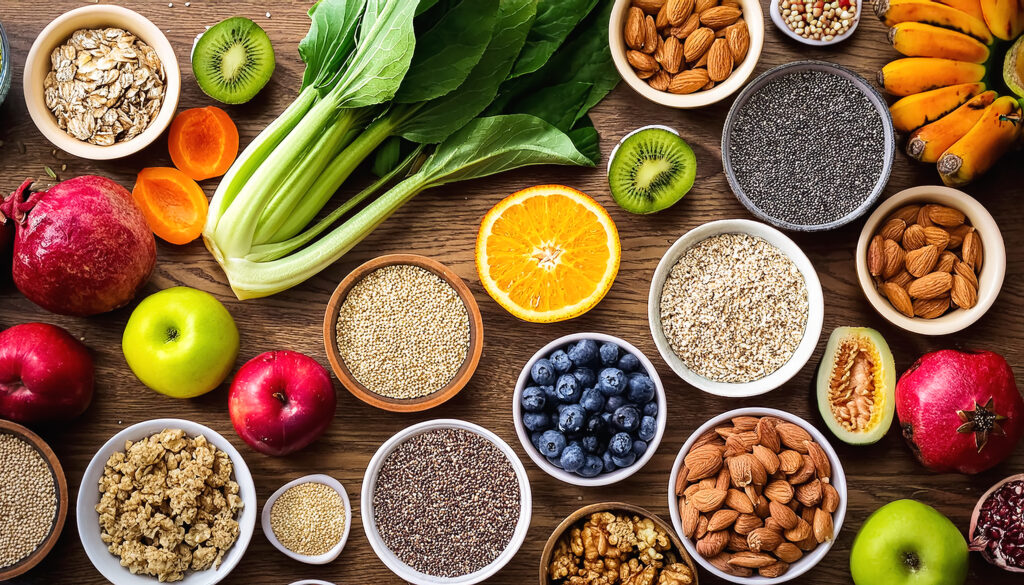
Whenever possible, I prefer a food-first approach. Good sources of fiber include beans and lentils, berries, pears, apples, avocados, broccoli, Brussels sprouts, peas, oats, barley, whole grains, chia and flax seeds, almonds, pistachios, and other nuts and seeds.
You also don’t have to completely overhaul your diet to make a difference. Add berries or chia seeds to Greek yogurt. Add beans to a salad or soup. Choose a higher-fiber bread or tortilla. Have an apple with peanut butter. Include a vegetable with lunch and dinner.
One of my favorite ways to approach nutrition is to shift the question from “What do I need to take away?” to “What could I add to make this meal better?”
Fiber supplements can also be useful. Psyllium, for example, has good evidence for supporting bowel regularity and lowering LDL cholesterol. But supplements don’t provide everything that comes along with whole foods, so think of them as a tool when needed—not a replacement for eating plants.
Increase Fiber Gradually
If you currently eat very little fiber, don’t suddenly decide tomorrow that you’re going to eat 40 grams a day. Your gastrointestinal tract may have some complaints.
Increasing fiber too quickly can cause bloating, gas, cramping, and changes in bowel habits. Increase it gradually and make sure you’re drinking adequate fluids, especially when adding concentrated fiber sources such as psyllium.
Some people with gastrointestinal conditions also need individualized recommendations about the amount or type of fiber they consume, so more is not automatically better for everyone.
What About Fiber on a GLP-1?
Fiber deserves a little extra consideration if you’re taking a GLP-1 medication such as semaglutide or tirzepatide. These medications can slow gastrointestinal motility, and constipation is a common side effect. At the same time, reduced appetite can mean you’re eating much less food, making it easier to fall short on fiber and fluids.
But simply adding large amounts of fiber isn’t always the answer. If your gastrointestinal tract is already moving slowly and you suddenly add a large amount of fiber without adequate fluid, you may actually feel worse.
For both men and women taking GLP-1 medications, I want to find a balance that allows them to get enough protein, fiber, fluids, and essential nutrients despite eating less overall. Persistent or significant constipation should be discussed with your healthcare provider rather than managed by simply adding more and more fiber.
Fiber Is About More Than Constipation
Most people hear “fiber” and immediately think about bowel movements. And while digestive health is certainly part of the story, fiber does much more.
It can support blood sugar regulation, cholesterol levels, satiety, the gut microbiome, and long-term cardiometabolic health. Even better, increasing fiber usually means eating more of the foods we already know are associated with good health: vegetables, fruits, legumes, whole grains, nuts, and seeds.
You don’t have to obsessively count every gram. Start by looking at what you already eat and finding small opportunities to add more fiber-rich foods. Those small changes, repeated consistently, matter far more than trying to create the “perfect” diet overnight.
Protein deserves the attention it gets, especially during weight loss and as we age. But fiber deserves a place at the table too.
Your muscles need protein. Your gut and metabolic health need fiber.