
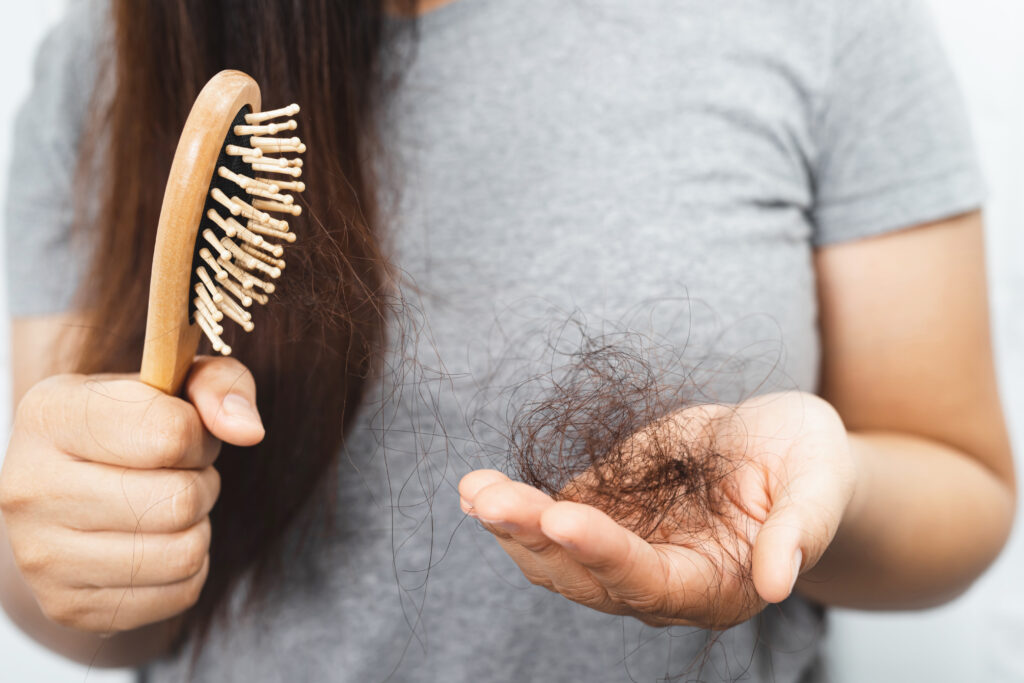
Hair loss is a frustrating—and often emotional—experience for many women, especially during times of hormonal change, weight fluctuation, or chronic stress. While it’s often thought of as a cosmetic concern, hair loss can actually be a sign of an underlying medical condition and deserves a thorough evaluation.
The good news? Many causes of hair loss are treatable. Identifying the underlying reason is the first step toward improving both your hair health and your overall health.
Hair Loss and Perimenopause & Menopause
As women transition through perimenopause and menopause, declining estrogen levels can significantly impact hair growth.
Estrogen helps keep hair follicles in the active growth (anagen) phase. As estrogen declines, more hairs enter the resting (telogen) phase, leading to increased shedding and gradual thinning—often most noticeable along the part line or crown.
Other hormonal changes can also contribute:
* Relative increases in androgen activity may lead to female pattern hair loss in genetically susceptible women.
* Thyroid disorders, which become more common in midlife, can also cause diffuse hair thinning.
* Sleep disruption, chronic stress, and nutritional changes associated with menopause may further contribute to hair loss.
Hair Loss During Weight Loss
Losing weight can dramatically improve your health, but rapid or significant weight loss can sometimes trigger temporary hair shedding known as telogen effluvium.
Hair shedding typically begins 2–3 months after the triggering event.
Common contributors include:
* Rapid weight loss
* Very low-calorie diets
* Inadequate protein intake
* Iron deficiency
* Low ferritin (iron stores)
* Vitamin D deficiency
* Significant illness or surgery
* Physiologic stress from major body changes
Even medically supervised weight loss—including treatment with GLP-1 medications—may be associated with temporary shedding. In most cases, this improves once weight stabilizes, nutritional needs are met, and the body adjusts.
Other Medical Causes of Hair Loss
Hair loss has many potential causes, including:
* Iron deficiency (with or without anemia)
* Low ferritin
* Thyroid disorders
* Vitamin B12 deficiency
* Vitamin D deficiency
* Autoimmune conditions such as alopecia areata or lupus
* Polycystic Metabolic Ovary Syndrome (PMOS), the updated name for PCOS, which recognizes the central role of metabolic dysfunction and insulin resistance in addition to reproductive and androgen-related symptoms
* Chronic illnesses or recent infections
* Certain medications (including some blood thinners, antidepressants, and chemotherapy)
* Genetic female pattern hair loss
Diagnosing the Cause of Hair Loss
Because hair loss has many possible causes, treatment should begin with finding the underlying reason—not simply trying products that promise thicker hair.
A thorough evaluation may include:
* Detailed medical history
* Physical examination
* Review of medications
* Assessment of recent weight loss, illness, surgery, stress, or dietary changes
Depending on your symptoms, laboratory testing may include:
* Complete Blood Count (CBC)
* Thyroid Stimulating Hormone (TSH)
* Ferritin
* Vitamin B12
* Vitamin D
* Iron studies when appropriate
* Testosterone and SHBG when excess androgen symptoms are present
Additional evaluation or referral to a dermatologist may occasionally be recommended.
Treatment Options
Treatment depends on the underlying cause and is individualized for each patient.
1. Correct Nutrient Deficiencies
When deficiencies are identified, replacing them is an important part of treatment.
This may include correcting:
* Iron deficiency or low ferritin
* Vitamin D deficiency
* Vitamin B12 deficiency
Adequate protein intake is also essential for healthy hair growth, particularly during weight loss.
2. Optimize Hormonal Health
For women experiencing hair thinning during perimenopause or menopause, hormone therapy may improve hair quality in some women by addressing estrogen deficiency, although it is not considered a primary treatment for hair loss.
For women with androgen-related hair loss, medications that reduce androgen effects—such as spironolactone—may be appropriate.
3. Prescription Hair Loss Medications
Prescription medications are often among the most effective treatments for female pattern hair loss.
These may include:
* Topical minoxidil, the only FDA-approved treatment for female pattern hair loss
* Low-dose oral minoxidil, which may be appropriate for selected patients
* Finasteride, an oral medication sometimes used in carefully selected postmenopausal women to reduce the effects of DHT on hair follicles (it should not be used during pregnancy or in women who may become pregnant)
Treatment decisions are individualized based on your age, reproductive status, medical history, and the underlying cause of hair loss.
4. Reduce Stress and Support Overall Health
Physical and emotional stress can contribute to hair shedding.
Supporting overall health through:
* Adequate sleep
* Regular physical activity
* Stress management
* Balanced nutrition
can all help support healthy hair growth.
5. Platelet-Rich Plasma (PRP)
PRP therapy uses growth factors from your own blood to stimulate hair follicles and may be an option for selected patients with female pattern hair loss.
What to Expect
Hair grows slowly, so improvement takes time.
Most patients will not notice meaningful changes for 3–6 months, and maximum improvement may take 9–12 months depending on the underlying cause and treatment.
Consistency is essential, and treating the underlying medical condition is just as important as treating the hair itself.
When Should You Seek Medical Evaluation?
Talk with your healthcare provider if you notice:
* Sudden or excessive hair shedding
* Patchy areas of hair loss
* Progressive thinning
* Hair loss associated with fatigue
* Heavy menstrual bleeding
* Irregular periods
* Weight changes
* Acne or unwanted facial hair growth
Hair loss is often your body’s way of signaling that something else deserves attention.
The Bottom Line
Healthy hair starts with a healthy body.
Whether your hair loss is related to perimenopause, menopause, weight loss, PMOS, nutritional deficiencies, or another medical condition, identifying the underlying cause allows us to create an evidence-based treatment plan tailored to your individual needs.
If you’re struggling with hair loss, know that you’re not alone—and effective treatments are available.